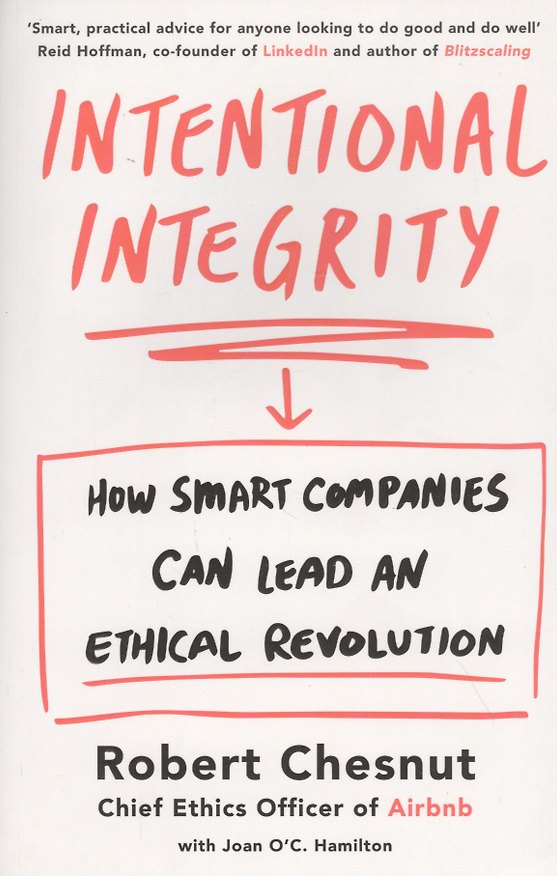
Intentional Integrity
Купили 5 человек
- Переплёт Мягкий
- Кол-во стр. 306
- Вес 389 г
- Год издания 2020
Отзывы
Описание и характеристики
Defining integrity is difficult. Once understood as "telling the truth and keeping your word," it was about following not just the letter but the spirit of the law. However, at a time when workplaces are becoming more diverse, global, and connected, silence about integrity creates ambiguities about right and wrong that make everyone uncertain, opening the door for the minority of people to rationalize selfish behaviour. Meanwhile, trust in most traditional institutions is at an all-time low and there’s a dark cloud hovering over technology. And this is precisely where companies come in; as peoples’ faith in establishments deteriorates, they’re turning to their employer for stability.
In Intentional Integrity, Chesnut offers a six-step process for leaders to foster and manage a culture of integrity at work. He explains the rationale and legal context for the ethics and practices, and presents scenarios to illuminate the nuances of thinking deeply and objectively about workplace culture.
We will always need governments to manage defence, infrastructure, and basic societal functions. But, Chesnut argues, the private sector has the responsibility to use sensitivity and flexibility to make broader progress - if they act with integrity.
- Переплёт Мягкий
- Кол-во стр. 306
- Вес 389 г
- Год издания 2020
- Издательство
- Размеры в см 2.4x15.3x23.2
- ID товара 2826420
- ISBN 978-1-52-904883-4, 978-1-5290-4883-4